
Warren County Parole and Probation
Parole and probation both permit a person to live in the community under stated rules, but they begin in different ways. The State Board of Pardons and Paroles grants parole after part of a state prison sentence. A judge orders probation as part of a criminal sentence, often without a state prison release first. The Georgia Department of Community Supervision, or DCS, handles field supervision for Georgia parolees and felony probationers. DCS took responsibility for parole field supervision in 2015.
A Warren County jail release alone does not reveal which status applies. Bond release before trial is not parole. A sentence may include probation, while a person leaving GDC may begin parole. The sentencing docket, Parole Board tools, and DCS office each answer one part of the question.
| Point | Parole | Probation |
|---|---|---|
| Who orders it | State Board of Pardons and Paroles | Sentencing court |
| When it begins | After release from a parole-eligible prison term | As directed by the sentence |
| Public verification | Parolee Database and Board records | Court docket and DCS |
| Field agency | Georgia DCS | Georgia DCS for felony probation |
| End point | Discharge, expiration, or another Board action | Completion, discharge, or court modification |
- Parole
- Conditional community release before a state prison sentence fully expires.
- Probation
- Court-ordered community supervision that forms part of the sentence.
- Discharge
- The formal end of a sentence or supervision term.
- Detainer
- A request by another authority to take custody when the current agency releases the person.
Check Warren County Supervision
Start with the custody history, not just the person's present location. Someone released from Warren County Jail on bond may have no post-release supervision. Someone sentenced to GDC can have a state offender record and a parole decision. A person sentenced to felony probation may appear in the Warren County court record even when a parole search returns nothing.
- Check the Warren County criminal case for the sentence, probation language, revocation orders, or later modifications.
- For a current state prisoner, use the Board's Inmate TPM Lookup. A tentative parole month is not active supervision.
- For someone already released on parole, use the Parole Board's parolee database linked from its home and parole population pages.
- Confirm the office serving Warren County through the DCS field-office directory. DCS handles daily reporting and supervision.
- If records conflict, contact the court, Board, or DCS source that owns the disputed status. A jail absence is not proof that supervision ended.
The Parole Population in Georgia page explains the link between the parolee database and DCS supervision. A name-only result can still be ambiguous. Compare identifiers and the county or case details before treating the result as the same person.
The official Parole Board landing page shows the separate paths for inmates and parolees. View that source before using its lookup links.
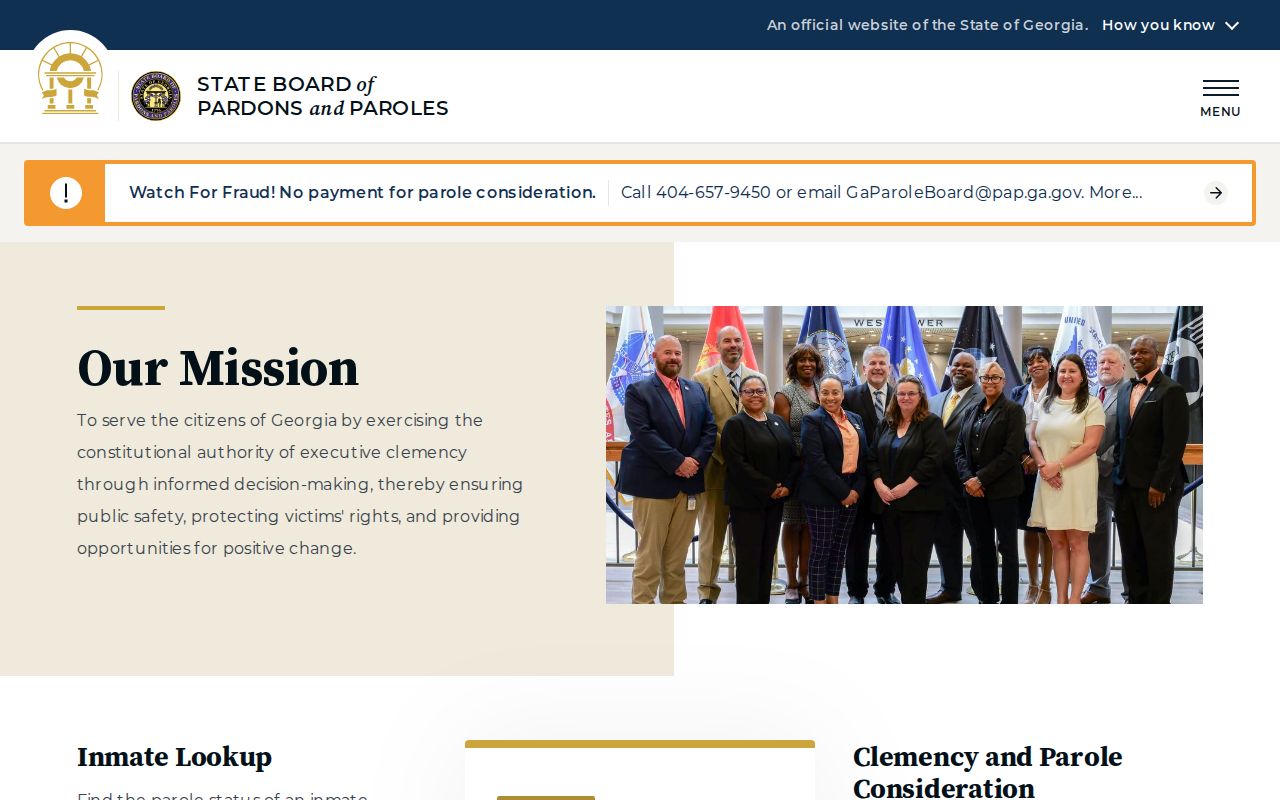
The screen reinforces why an inmate TPM lookup and a released-parolee search are not interchangeable.
Warren County Thomson Supervision Office
Warren County does not have a DCS field office listed in Warrenton. The DCS field-office directory places Warren County under the Thomson office. It also serves several nearby counties and circuits. That regional arrangement matters when a release plan requires reporting outside the county seat.
1025 Warrenton Highway
Thomson, GA 30824
DCS general contact: 678-783-4337
General hours: Monday-Friday, 8:00 a.m.-5:00 p.m.
The listed general number and hours come from the DCS contact page; the research did not identify a separate Thomson direct number or office-hours posting. Confirm reporting instructions from the person's own supervision paperwork rather than assuming walk-in service.
The DCS directory screenshot documents the Warren-to-Thomson assignment. Review the current directory listing before travel.
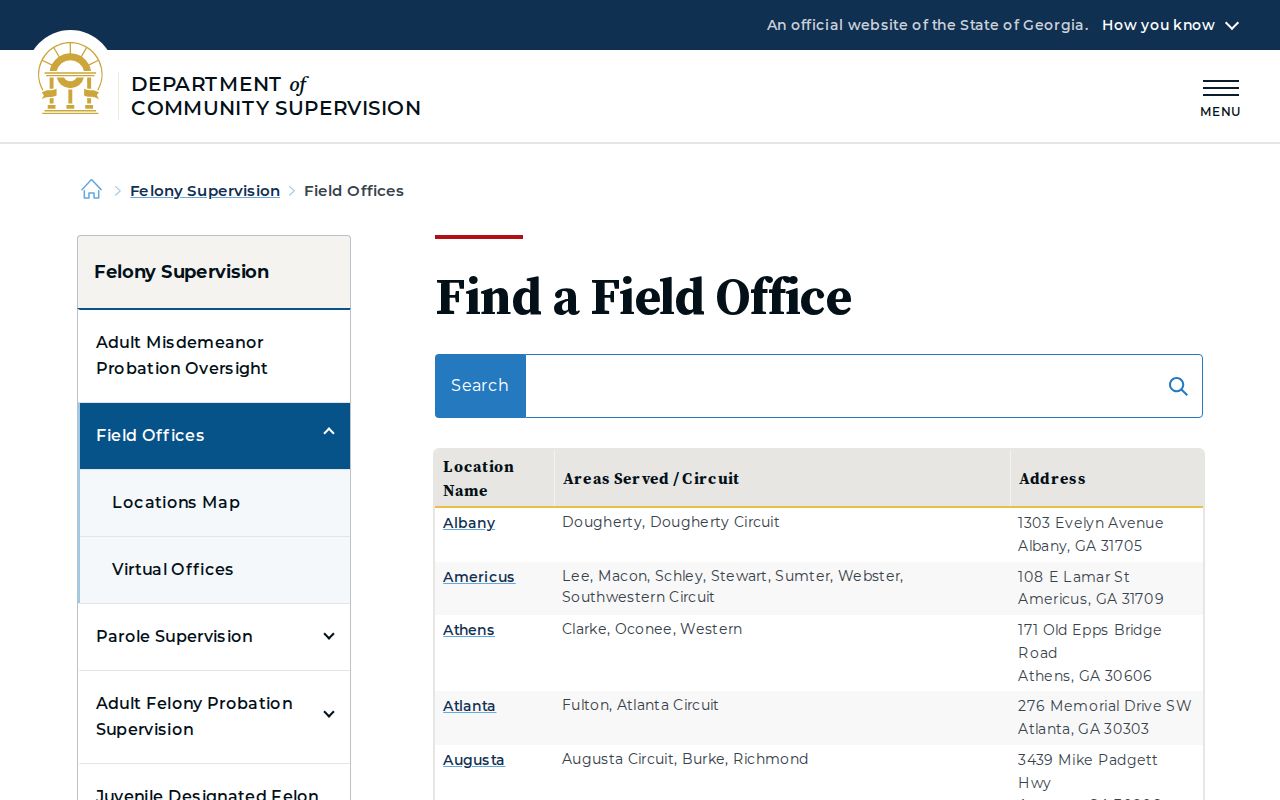
This regional office detail is a stronger supervision lead than searching only for an office in Warrenton.
Warren County Parole Decisions
Georgia does not use a county hearing calendar for individual parole decisions. A parole-eligible person in GDC custody is considered automatically. No application is needed. The Board may set a Tentative Parole Month, deny parole, or revisit a decision before release. A majority vote is required for clemency.
The Board's public meeting notices are easy to misread. Monthly notices and agendas appear in the press-release stream, and meetings can be canceled. Those public meetings address Board policy and operations. The Board states that individual offender cases are not considered and parole decisions are not made there. A Warren County person's result belongs in the TPM lookup while incarcerated or the parolee database after release.
Possible status results include no TPM yet, a TPM set, postponement or cancellation, denial, final approval with a date, parole to a detainer, active supervision, violation proceedings, and sentence expiration. Eligibility is not a promise of release. Under O.C.G.A. § 42-9-45, most otherwise eligible felony sentences reach eligibility after nine months or one-third of the term, whichever is greater, unless another law controls.
The Board's guidelines system considers the offense and the person's risk score, but the resulting guideline recommendation does not bind the Board. Georgia law requires the Board to maintain parole guidelines under O.C.G.A. § 42-9-40. Separate rules can remove eligibility. The Board describes serious violent felony limits, fourth-or-more felony recidivists, and life-without-parole sentences among the categories that do not follow the ordinary parole path.
A person still in prison belongs in the TPM lookup, not the released-parolee database. After parole begins, the parolee database and DCS become the relevant public paths.
Final planning can also depend on a residence plan and any detainer. The Board may ask DCS to investigate a proposed residence before release. A detainer is a claim by another local, state, federal, or military authority. If parole is approved to a detainer, the person leaves GDC through a conditional transfer rather than beginning ordinary community release in Warren County. The status label and receiving authority must be read together.
Warren County Violation Status
No official Warren County sheriff warrant or absconder list was found. An absconder is a supervised person whose whereabouts are unknown after failing to report or follow required contact rules. That label does not come from merely being absent from a jail roster. Likewise, a supervision violation may lead to a warrant, a hearing, a return to custody, a modified condition, or no immediate custody event.
Check the statewide parolee database for parole status, the Warren County court docket for probation orders and revocation events, and DCS for the office responsible for field supervision. VINELink can provide custody notifications where a participating agency supplies data, but it is not a full parole or probation record. A released person's noncustody result does not rule out active supervision or a pending violation process.
Conditions vary by the order and the person's case. They can govern reporting, residence approval, travel, treatment, payment duties, or contact with named people. Public summary tools rarely show every condition. A family member trying to confirm a reporting location should use the person's release paperwork and the assigned DCS office, while questions about the legal scope of a probation order belong with the Warren County court that imposed it. Do not infer a violation from a missed appointment, rumor, or stale online result.
Warren County Supervision Discharge
Supervision ends through an official act, not because a public search result disappears. Parole may conclude through sentence expiration or Board discharge. Probation may end when its term is complete, after a court-approved discharge, or after another sentencing order. A violation can interrupt that path and change the record.
For a durable record, ask the agency that issued the action. The Board owns parole decisions. The sentencing court owns probation orders. DCS handles field supervision, but a public requester may not receive the full case file. The Warren County release record path can help distinguish a jail release from the later end of supervision.
Georgia V.I.P. may report parole status, eligibility, a maximum or scheduled release date, or not-in-custody status for covered records. It does not replace a final discharge document. Keep the person's GDC ID, case number, and copies of court or Board orders when exact status must be confirmed.
A parolee record can also change after a detainer transfer or revocation. A probation docket can show an amended order, a hearing, or an early discharge. Compare the date of each action with the sentence term before deciding that an older status remains current. If the Parole Board database, DCS information, and a court entry seem inconsistent, contact the agency responsible for the newest action and ask what document confirms present status.
Georgia V.I.P. offers another limited status check for covered GDC and parole records. Callers use a six-digit case or EF number, or a GDC ID. The automated system may state incarceration location, parole status or eligibility, a maximum or scheduled release date, or that the person is not in custody. Registered victims or a victim's family follow the Office of Victim Services process and receive a four-digit PIN. Those notifications can cover release after a prison term, release to begin probation, or parole release, but the agency order remains the controlling record.
Public Record Search
Sponsored Results